Humanitas e l’armonia dei luoghi. In ricordo di Léon Krier
Humanitas and the harmony of place.
In memory of Léon Krier
International Conference
Villa Falconieri, Frascati
May 28-31, 2026
Cities and landscapes are illustrations of our spiritual and material worth. They not only express our values but give them a tangible reality. They determine the way in which we use or squander our energy, time, and land resources.
Léon Krier, The Architecture of Community
You must start from the beginning, letting your new buildings grow from the daily lives of the people who will live in them, shaping the houses to the measure of people's songs, weaving the pattern of a village as if on the village looms, mindful of the trees and the crafts that grow there, respectful of the skylines and humble before the seasons.
Hassan Fathi
In continuation with the two architectural conferences “Firmitas, utilitas, venustas – for the rebirth of human architecture”[1] (2024) and “Hereditas urbium: the inheritable city – concrete examples of a real urban regeneration”[2](#_bookmark1)[] (2025), the Accademia Vivarium novum rekindles the discussion on the city of the future addressing the question of the ideal environment in which humans can thrive and which legacy they should leave behind.
The fact that we currently live in a time of crisis appears evident on multiple fronts (cultural, social, political, moral, spiritual) as values and ideals are substituted by trivial needs, human aspirations are banalized and commodified, and people are distracted by seductive futilities. The result (and goal) is that entire societies, and thus cities, are subjected to the dictates of artificial algorithms, market laws, and economic powers.
To counteract the ubiquitous loss of meaning and humanitas, the Accademia Vivarium novum, celebrating over fifty years of activity, advocates for a renaissance of the highest categories of the human spirit through the active study of literature, philosophy, music, art, and architecture. These disciplines are indeed instrumental in forming a better human kind and societies at large, and are taught at the various institutes and initiatives of the World Campus for the Humanities, founded and promoted by the Accademia Vivarium novum.
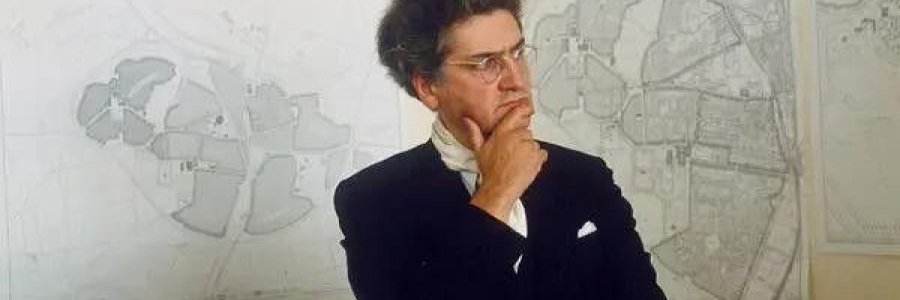
In this sense, the 2026 edition of the annual conference on architecture and urbanism will be dedicated to the extraordinary work of Léon Krier (1946-2025), and intends to explore the feasible intersections of architectural practices with notions of beauty, respect, suitability, environmental care, and human scale, in the effort to propose solutions for the future, build liveable cities, and offer valuable legacies for the next generations.
The conference is articulated in six sessions, including established personalities, young professionals, and experts in one of the disciplines closely connected to the world of urban planning and architecture (e.g. urban sociology, economics, environmental studies, neuroscience, finance and real estate markets). A debate involving the public is encouraged after every session and during a final round table.
[1] https://vivariumnovum.net/it/events/congresses/24-04-firmitas-utilitas-venustas
[2] https://vivariumnovum.net/it/events/congresses/hereditas-urbium-the-inheritable-city
Program
Thursday May 28, 15:00 - 18:30 – Villa Mondragone Institutional greetings
Opening introduction by Irene Stillman Krier and Luigi Miraglia Session I - The Legacy of Léon Krier
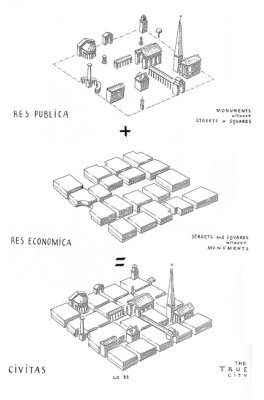
A city can only be reconstructed in the form of urban quarters. A large or a small city can only be reorganized as a large or a small number of urban quarters; as a federation of autonomous quarters. Each quarter must have its own centre, periphery and limit. Each quarter must be a city within a city.
Léon Krier, The City Within the City
Léon Krier's passing in June 2025 is an inestimable loss for urban and architectural culture worldwide. Considered the father and spiritual guide of an entire architectural movement, Krier left a mark even on his detractors. In the many years of his activity, he worked against the tide of anonymous modernity and depersonalizing architecture, counter-proposing a respect for the roots and identity of places, and a rediscovery of common-sense traditions. Krier has above all defended urban planning on a human scale against the levelling standards of zoning, as theorized – in the interests of the automotive industry – at the Fourth International Congress of Modern Architecture held in 1933 aboard the ship “Patris II”, and better known as the “Athens Charter”.
Invited to the Accademia Vivarium novum as key-note speaker in 2025, Leon Krier will be remembered in this panel which aims to be a tribute to his immense achievements and enduring legacy.
- Lucien Steil (Architect, Professor of the practice, School of Architecture, University of Notre Dame, U.S.A., Luxembourg)
- Fahad Bin Mohammed Al-Attiyah (former Ambassador of Qatar; Chairman of INTBAU, Qatar) – presentation of video-interview of Léon Krier produced by Caravane Earth Foundation.
- Ettore Maria Mazzola (Architect and Urbanist, Professor of the practice School of Architecture, University of Notre Dame in Rome)
- Dhiru Thadani (AIA, Architect and Urbanist, former collaborator and editor of Leon Krier, U.S.A.)
Friday, May 29 – Villa Falconieri
09:30 Inauguration of the Exhibition of Architectural Projects and Young Architects Award
Institutional greetings
Session II - Architecture, decorum, and the necessity of beauty
Est autem decorum quod aptum est et consentaneum naturae. Decorum is that which is fitting and in harmony with nature.
Cicero defines decorum as what is fitting and consistent with nature, a concept akin to the “appropriateness” expressed by the ancient Greek πρέπων (prépōn) and the notion of giving to each his own (unicuique suum). Applied to architecture, decorum requires that the form, scale, ornamentation, and appearance of a building correspond to its function, social role, and setting, a principle also codified by Vitruvius and much debated today.
What do architects owe to places, institutions, and publics? Can beauty still function as a shared civic value, or has it become purely subjective? How does decorum—understood as suitability, propriety, and ethical restraint—shape architectural form today? Drawing from history, theory, and contemporary practice, this session intends to reconsider whether beauty and decorum are nostalgic ideals or necessary frameworks for a meaningful, humane architecture.
- Maria Fernanda Sànchez (Architect, Estudio Urbano, Guatemala)
- Abdel-Wahed El-Wakil (Architect, Egypt)
- Myriam Samir Rincon (young architect, Mexico; recipient of the First prize for urban design of the AVN Young Talents of Classical Architecture Contest, 2025)
- Francis Terry (Francis Terry & Associates, U.K.)
- Jonathan Weatherill (Architect, Professor of the practice School of Architecture, University of Notre Dame in Rome)
Open discussion
Visit of Villa Falconieri and the Poikile project for the rebirth of the visual arts Session III – Neuroscience, architecture, and the experience of beauty
Authentic architecture is not the incarnation of the spirit of the age but of the spirit, full stop.
What impact does beauty have on the human being? What makes a space feel beautiful— and why does it matter to live in harmonious surroundings? This panel explores beauty not as a subjective preference, but as a human need that informs cognition, emotion, health, and social behaviour. Drawing from architecture, neuroscience, and aesthetics, panelists examine how built environments influence the brain, how sensory experience affects wellbeing, and how design choices can either nourish or deplete human potential. In this sense the discussion wishes to reframe beauty as an ethical responsibility—one that architects, designers, scientists, and policymakers must share to safeguard the past and shape a better future.
- Stefano Serafini (Philosopher, Psychologist, Editor, Founder of Bio-urbanism; Italy)
- Donatella Caramia (Professor of Neurology, University of Rome Tor Vergata; Italy)
- Olga Sezneva (Cultural and Urban Sociologist, University of Amsterdam; Netherlands)
- Robert Davis (Founder of Seaside, Florida, U.S.A.)
Concert of the Tyrtarion choir of the Accademia Vivarium novum
Saturday, May 30
Session IV - Rooted in place: architecture, landscape, and living traditions
I look for myself where I find myself. Like a spider, my aspiration is to attach my thread to tradition and from this starting point weave my own web.
Jože Plečnik
“Mi cerco là dove mi ritrovo. Come un ragno, la mia aspirazione è di attaccare il mio filo alla tradizione e a partire da questa tessere la mia propria tela”, cited in Damjan. Prelovšek, “Il mestiere e la vita di un uomo” in Jože Plečnik. Architetto 1872 – 1957, Centro Culturale di Arte Contemporanea Internazionale. Rocca Borromeo, 1988, p. 38
This session examines the relationship between architecture and landscape through the lens of vernacular and traditional building practices. Across cultures, histories, and geographies, architecture has long emerged from close observation of climate, terrain, materials, craft, and even social customs, rituals, and collective memory. In a moment of ecological uncertainty and cultural homogenization, this session asks what contemporary practice can learn from place-based traditions that integrate buildings, landscapes, and ways of life that offer models for resilience, sustainability and cultural continuity.
- Taimoor Khan Mumtaz (Architect, Professor of the practice, Hast-o-Neest Institute of Traditional Studies & Arts, Pakistan)
- Maxim Atayants (Architect, Maxim Atayants Workshop, Russia)
- Vitor Ilidio (Recipient of the First prize for Architecture in the AVN Young Talents of Classical Architecture Contest, 2025; Brazil)
- Georgia Cristea (Conservation Architect & Interior Designer, London, U.K.)
- Ulrich Gehmann (Founder & Director of Ideal Spaces Foundation, Germany)
Open discussion
14:30 Visit of Villa Parisi
Session V – What future for our cities? The cost of ugly buildings and the benefits of preserving beauty
The city is not a problem; it is the greatest hope of mankind. Properly conceived, it is humanity’s most civilizing invention.
Léon Krier
Drawing on Léon Krier’s advocacy for traditional, human-scaled cities, this conclusive session will ask whether lessons embedded in traditional urban forms can inform more humane, resilient, and sustainable cities for future generations. While addressing issues of accelerating climate change, increasing population, housing shortages, cultural homogenization, and social fragmentation, panelists will critically reassess modern planning paradigms and explore alternative futures grounded in place, memory, and civic life.
- Alireza Sagharchi (RIBA, FRSA, Principal of Stanhope Gate Architecture, U.K.)
- Mariano Bizzarri (Full Professor of Pathology, Head of the Space Medicine Laboratory, University of Rome, La Sapienza) - Urban complexity and human health
- Eduardo De Barros (Founder at Al-Insaniya City (Abu-Dhabi), United Arab Emirates)
- Jason Montgomery (Associate Professor School of Architecture, Catholic University of America)
Sunday, May 31
Session VI - Open discussion with founders of Traditional Architecture schools in Europe.
Moderator: Georgia Cristea
- Nadia Naty Everard (La Table Ronde d’Architecture, France)
- Ana Maria Goilav (Bunești School of Architecture, Romania)
- Matthew Hardy (Architect and founder of INTBAU, U.K.)
- Frank Martinez (University of Miami, U.S.A.; Fundación Culturas Constructivas Tradicionales, Spain)
… qui se architectum profiteatur… Itaque eum etiam ingeniosum oportet esse et ad disciplinam docilem; neque enim ingenium sine disciplina aut disciplina sine ingenio perfectum artificem potest efficere. Et ut litteratus sit, peritus graphidos, eruditus geometria, historias complures noverit, philosophos diligenter audierit, musicam scierit, medicinae non sit ignarus, responsa iuris consultorum noverit, astrologiam caelique rationes cognitas habeat.
… therefore, who professes to be an architect must also be ingenious and eager to learn, for neither genius without discipline nor discipline without genius can produce a perfect craftsman. And he should be a man of letters, skilled in the use of the pen, learned in geometry, acquainted with many histories, a diligent disciple of philosophers, versed in music, not ignorant of medicine, familiar with the opinions of jurists, and knowledgeable of astrology and the movements of the heavens.
Vitruvius, De Architectura, I.3,5-15
English
Italiano
Latina